Services








0% Interest Payment Plan Get Your New Roof Financed
We aim to help you solve your home improvements & repair issues without disturbing your household cashflow


A roof leak doesn’t announce itself. By the time you notice the stain on your ceiling, water has already been travelling along timber battens, rafters, and insulation for some time. The entry point is rarely directly above the damage — it could be metres away.
For Sydney homeowners, the stakes are real. Storm season, heavy coastal rain, and wide temperature swings accelerate roof wear faster than many realise. Finding a leak early can save thousands. Ignoring it can mean rot, mould, and structural repairs that dwarf the original fix. This guide walks you through how to find the source, what to do next, and when to call in the professionals.
Most roof leaks don’t have a single cause. They result from a combination of age, weather, and deferred maintenance — all converging in one weak point. Here are the most common culprits Sydney roofers encounter.
Terracotta and concrete tiles are common across Sydney’s older housing stock and both have a finite lifespan. Tiles crack, mortar crumbles, and waterproof membranes dry out. Once a material loses its integrity, it’s only a matter of time before rain finds a way through.
Strong winds, fallen branches, hail, and foot traffic can break or dislodge tiles and metal sheets. Sydney’s east coast low events are particularly damaging — a single storm can displace multiple tiles, leaving the roof cavity exposed for weeks without anyone noticing.
Flashing seals the joints around chimneys, skylights, vents, and roof valleys. It’s thin, exposed metal — and in Sydney’s coastal air, it corrodes faster than inland. Loose, rusted, or poorly installed flashing is one of the top causes of recurring leaks that are hard to trace.
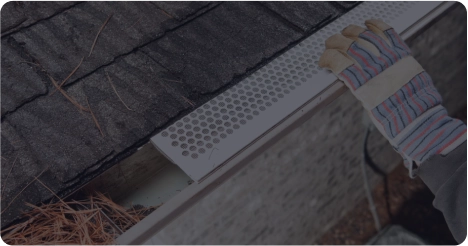
When gutters fill with leaves and debris, water backs up and pools at the roof edge. That pooling water finds gaps under tiles, works its way into fascia boards, and eventually enters the ceiling cavity. In Sydney’s urban and leafy suburbs, gutter cleaning is a recurring maintenance job, not a once-off.
Every pipe, vent, antenna mount, and skylight that passes through your roof is a potential leak point. The silicone or rubber seals around these penetrations shrink and crack under UV exposure — Sydney averages over 2,600 hours of sunshine per year, so these seals degrade faster than you might expect.
A DIY repair or a cut-price job can leave behind uneven overlaps, inadequate sealant, or missing bedding under ridge caps. These weaknesses sit dormant until the first heavy downpour — then water finds them fast.
Sydney’s climate swings from scorching summer heat to winter storms and everything in between. That thermal expansion and contraction stresses roofing materials year-round, opening small cracks and gaps over time that eventually let water in.
A leaking roof rarely fixes itself. Catching these issues early prevents the cascade effect: one small leak becomes rot, rot weakens the structure, and the repair bill grows accordingly.
Roof leaks worsen with every rain event. A small ceiling stain today can become a large area of rot, mould, or structural weakening within months. Catching it early means:
Because water travels before it drips, a ceiling stain rarely marks the leak’s source. A systematic search — inside and out — is the only reliable approach.
Start inside — it’s safer and it gives you a reference point for where to focus your exterior search.
Water stains appear as brown or yellowish rings on plasterboard or paint. Note where they are — but remember the actual entry point is often upslope from the stain, sometimes by a metre or more.
If you can access your roof space safely, look for wet timber, damp insulation, or a musty smell. These are often the earliest indicators of a leak before any ceiling staining appears.
Audible dripping during a storm is a clear active leak. The drip location inside is a starting point, not the leak location on the roof.
Moisture trapped behind painted surfaces causes bubbling and peeling over time, particularly on ceilings. This suggests water has been entering for a while, even if you haven’t seen dripping.
If you’re comfortable doing so, inspect from the ground first using binoculars. A close-up inspection requires appropriate safety precautions — never get on the roof in wet conditions or without proper footwear and ladder setup.
Broken, cracked, or missing tiles are the most obvious entry points. Even a hairline crack lets water in, and what looks minor from the ground can be significant up close.
Check all the joints and transitions. Rust, gaps, or lifted edges on flashing are red flags. This is the number one area to check on Sydney homes — coastal air accelerates corrosion significantly.
Crumbling mortar or displaced ridge caps are common on Sydney homes over 15 years old. Water entering here runs straight down into the roof cavity along the ridge line.
Moss retains moisture against tile surfaces, accelerating deterioration. Heavy debris in valleys blocks water flow, causing it to back up under tiles. Both warrant attention even if they aren’t leaking yet.
Overflow from clogged gutters redirects water under roofing edges, causing leaks along eaves and internal walls. This is one of the most preventable causes of water damage in Sydney homes.
Water stains are rarely directly beneath the roof entry point. Trace the path upward.
Follow wet timber or stained battens up the slope. Water travels downhill before dripping, so the source is always higher than where you see moisture collecting.
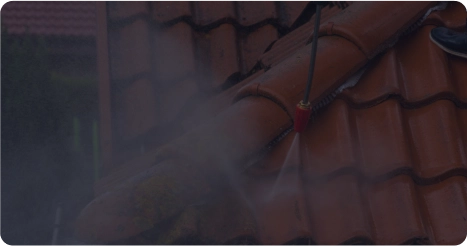
A controlled water test can isolate the entry point when the source isn’t obvious:
If visual inspection and the hose test don’t pinpoint the leak, specialist tools are the next step — particularly on complex roofs with multiple slopes, skylights, or extensions.
These handheld devices detect elevated moisture levels in roofing materials and ceiling linings — often before any visible staining appears. A trained technician can map the moisture pathway and identify the source accurately.
Infrared cameras detect temperature differences caused by moisture beneath roofing surfaces. Cold, damp areas show up clearly against the surrounding dry material. This is the most effective non-invasive method for locating hidden leaks without pulling up tiles or cutting into ceilings.
Finding the leak is only half the job. What you do next determines whether the problem is fixed properly or just patched until the next rain event. Here’s how the repair process works — from the temporary measures you can take immediately through to the permanent fixes a professional will apply.
If water is actively entering your home, take these steps to limit damage while you arrange a proper inspection:
Different leak causes require different repairs. A qualified roofer will identify the root cause and apply the appropriate fix — not just seal over the symptom.
Individual cracked tiles can be replaced like-for-like. Missing tiles need to be sourced — ideally matching the existing profile and colour. A professional will check surrounding tiles for hairline cracks at the same time, since hail or impact damage rarely affects just one tile.
Rusted or loose flashing around chimneys, skylights, and valleys is resealed or replaced entirely. In Sydney’s coastal areas, upgrading to a corrosion-resistant flashing material (such as colorbond or lead-free alternatives) is often worth the investment to avoid the same problem returning within a few years.
Crumbling mortar under ridge caps is removed and replaced with fresh bedding compound, then sealed with flexible pointing. This is a common repair on Sydney homes over 15 years old and is one of the most cost-effective preventive maintenance jobs you can do on a tiled roof.
Worn seals around vents, pipes, and skylights are stripped back and resealed with UV-stable silicone or rubber collar replacements. The penetration itself is inspected for any movement or damage before resealing.
If gutters are causing the leak through overflow or backfall, they may need cleaning, resealing at joins, or re-pitching to restore proper drainage. In some cases, a gutter replacement is more practical than ongoing repairs to a badly deteriorated section.
When a roof has multiple overlapping issues — cracked tiles, failed pointing, deteriorated membrane, and poor flashing all at once — a targeted repair approach is still possible but a full roof restoration is often more cost-effective in the long run. This involves a comprehensive inspection, repair of all identified faults, a fresh coat of roof paint or membrane, and re-bedding and repointing of all ridge caps.
Roof inspections and repairs carry real risk. Every year in Australia, falls from height account for a significant proportion of serious home improvement injuries. Follow these guidelines before going anywhere near your roof.
If there’s any doubt about roof access, stability, or your ability to work safely at height, leave it to the professionals. A licensed roofer carries the right equipment, insurance, and experience to do this safely.
Some leaks are straightforward. Others are not. Water can travel a considerable distance through the roof structure before it drips — and on complex roofs with multiple slopes, skylights, extensions, or valley configurations, tracing that path is genuinely difficult without specialist tools and experience.
Consider calling a professional if:
Professional leak detection avoids the costly cycle of trial-and-error repairs. Getting it right the first time is almost always cheaper than patching repeatedly.
Finding the source is only half the job. Fixing it correctly — the first time — is what protects your home long term. At SPS Roofing, we specialise in professional roof leak detection and repair across Sydney and NSW. Our team uses moisture meters and thermal imaging to locate leaks precisely, without unnecessary tile removal or invasive testing.
Our services include:
If you’ve noticed signs of a leak — or your roof took a hit in recent storms — contact SPS Roofing for a thorough inspection and a reliable fix. We offer same-day service and 24/7 emergency response across Sydney.
We aim to help you solve your home improvements & repair issues without disturbing your household cashflow

No catches or gimmicks. Have an option to spend now, pay later!

Apply & have an outcome in minutes!