Services













0% Interest Payment Plan Get Your New Roof Financed
We aim to help you solve your home improvements & repair issues without disturbing your household cashflow


Blocked gutters are one of the most preventable causes of roof leaks, wall damage, and foundation problems in Sydney homes. Yet most homeowners only think about their gutters after water starts coming in somewhere it shouldn’t. By then, the damage is done.
This guide walks you through exactly how to clean your gutters safely, what tools you need, when to do it, and how to know when the job is better left to a professional. If you have a single-storey home and a bit of confidence on a ladder, most of this you can do yourself. If you have a double-storey, steep pitch, or gutters in poor condition, skip to the section on when to call in a roofer.
Sydney’s tree coverage, coastal conditions, and intense summer storm seasons make gutter maintenance more critical here than in most Australian cities. Leaves from gum trees, Moreton Bay figs, and jacarandas fill gutters fast. Salt air from the coast accelerates corrosion on galvanised steel gutters. And when east coast lows arrive, they dump heavy rain on gutters that haven’t been touched in 12 months.
The result is water that overflows at the eaves, runs down brick or cladding, pools around foundations, and eventually finds its way inside. A $150 gutter clean can prevent a $5,000 water damage repair. That’s the equation.
For most Sydney homes, twice a year is the minimum: once in autumn after leaves have fallen, and once in spring before storm season begins. If your property has large trees overhanging the roof, you may need to clean every three to four months. A quick visual inspection every month or two takes two minutes and can catch a blockage before it becomes a problem.
Signs your gutters need cleaning right now:
Gather everything before you go up the ladder. Getting down to grab a forgotten tool wastes time and increases risk.
Never clean gutters in wet, windy, or stormy conditions. Wet gutters and ladder rungs are slippery. Check the forecast and choose a calm, dry day. Early morning or late afternoon works well in Sydney summers to avoid working in direct heat.
Also check for overhead power lines near your gutters before setting up the ladder. If any lines run close to the roof edge, do not approach them. Call a licensed electrician and your energy provider.
Position the ladder on firm, level ground. The base should be set back from the wall at a ratio of 1:4 — for every 4 metres of height, the base moves out 1 metre. Attach a ladder stabiliser so the rails rest against the wall rather than sitting in the gutter itself.
If you’re working alone, secure the base of the ladder to a ground anchor or stake it into soft ground. Better still, have someone hold the base. Moving a ladder every 2 to 3 metres along the gutterline is safer than leaning and overreaching.
Start at the downpipe end of each gutter run and work away from it. Scoop out leaves, twigs, mud, and any compacted debris with your gutter scoop or trowel. Drop the debris into your hanging bucket or down onto the tarp below.
Work in 2 to 3 metre sections, repositioning the ladder as you go. Do not lean or stretch sideways. If you can’t reach it comfortably from where you’re standing, move the ladder.
Once the bulk of debris is removed, use your garden hose to flush the gutter from the far end back toward the downpipe. This washes away fine sediment and shows you immediately whether the water is flowing properly to the outlet.
Watch for:
A clean gutter with a blocked downpipe achieves nothing. Direct the hose into the top of each downpipe and run it at full pressure. If water backs up rather than flows through, you have a blockage.
To clear a blocked downpipe:
If the blockage won’t clear or the downpipe is damaged, a roofing professional can inspect and replace the section without tearing apart the surrounding structure.
You’re at roof height — use it. A quick visual inspection while you have the ladder up takes 10 minutes and can catch problems early. Look for:
Note anything that looks wrong and get a professional assessment before the next rain event. Small issues caught now are minor repairs. Left until they cause water damage, they become major ones. If you spot damaged fascia, it’s worth reading up on what roof fascia does and when it needs replacing.
Collect the debris from your tarp and bucket and dispose of it in your green waste bin. Wash down the area below with the hose to remove any grime that settled on paths, driveways, or garden beds. Rinse your tools and store them dry to prevent rust.
Falls from ladders are one of the most common causes of serious injury in residential settings in Australia. These are not optional guidelines:
DIY gutter cleaning is reasonable for single-storey homes with accessible, intact gutters and a homeowner who is comfortable at height. Call a professional if:
A professional gutter clean in Sydney typically costs between $150 and $400 depending on property size and access. That’s a fraction of what water damage costs once it gets inside the walls or ceiling.
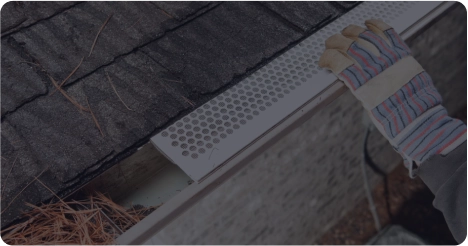
If you’re sick of cleaning gutters every few months, gutter guards are worth considering. They sit over the top of the gutter and allow water through while blocking leaves and debris. They don’t eliminate maintenance entirely — fine debris and dirt still build up over time — but they significantly reduce the frequency and difficulty of cleaning.
Before installing guards, make sure your gutters are clean and in good structural condition. Installing guards over blocked or damaged gutters makes the problem worse, not better. For a detailed breakdown of options and costs, see our guide on gutter guard installation costs in Sydney.
Your gutters don’t operate in isolation. They’re part of a drainage system that includes your roof tiles, valleys, downpipes, and stormwater connections. When gutters overflow, the water doesn’t just run off harmlessly. It pools around fascia boards, soaks into the roof cavity, runs down internal walls, and saturates the subfloor in older homes.
Regular gutter maintenance is one of the most cost-effective ways to extend the life of your roof overall. If you’re doing a proper inspection while you’re up there, also check whether the roof itself needs attention. Our guide on how to clean a roof safely covers what to look for and how to approach roof surface maintenance without causing damage.
If storm season is approaching, don’t skip the pre-season check. Read our guide on why a pre-storm gutter clean is essential for Sydney homeowners and what it should include.
For a standard single-storey home, allow two to three hours including setup, cleaning, flushing, and cleanup. Larger homes or those with heavy blockages will take longer. A professional with the right equipment can typically complete the same job in under an hour.
Yes, but with caution. High-pressure water can force water under roof tiles, damage gutter joints, and strip protective coatings. Use a low-to-medium pressure setting and keep the nozzle directed along the gutter rather than up toward the roof edge. A standard garden hose at full pressure is safer and usually sufficient.
Late autumn (May to June) after leaf fall, and early spring (September to October) before storm season. If you have large deciduous or native trees, a third clean in late summer may also be worthwhile. Avoid scheduling a clean in the middle of summer storms or winter — wet conditions make it unsafe.
Signs a gutter needs replacing rather than cleaning include: visible rust through the metal, cracks or holes in the gutter body, sections pulling away from the fascia that reattachment won’t fix, persistent pooling despite correct pitch, and joints that have failed and cannot be resealed. If in doubt, get a professional assessment before spending money on a clean that won’t solve the underlying problem.
For investment properties, gutter cleaning and maintenance is generally deductible as a property maintenance expense. For owner-occupied homes, it is not. Check with your accountant or tax adviser for advice specific to your situation.
We aim to help you solve your home improvements & repair issues without disturbing your household cashflow

No catches or gimmicks. Have an option to spend now, pay later!

Apply & have an outcome in minutes!